


Launching an online store in 2025 is both easier and more competitive than ever. The concrete reality is this: global e-commerce sales are projected to surpass $7.5 trillion in 2025 (Statista, 2024), meaning the market opportunity is massive, but so is the competition.
Success comes down to following structured steps: choosing the right niche, building a reliable platform, ensuring compliance, creating a seamless customer journey, and scaling with marketing and analytics.
Simply opening a store is no longer enough. Customers demand fast shipping, personalized recommendations, and secure checkout. Businesses that prepare with strategy, not just enthusiasm, are the ones that thrive.
Step 1: Define Your Niche and Target Audience

The foundation of success is niche clarity. A 2024 Shopify study revealed that 70% of failed e-commerce stores lacked a clearly defined target audience.
Choosing a broad category like “clothing” is risky; selecting a sub-niche like “sustainable yoga apparel for women” increases your chance of standing out.
| Niche | Global Market Value (2025 est.) | Growth Trend |
| Eco-friendly home products | $230B | +14% YoY |
| Pet supplies (premium & smart) | $180B | +11% YoY |
| Digital fitness & wellness gear | $95B | +18% YoY |
| Niche beauty/skincare | $190B | +9% YoY |
Step 2: Choose the Right E-Commerce Platform
In 2025, most stores operate on SaaS platforms. Shopify powers 28% of U.S. online stores, WooCommerce about 23%, and BigCommerce is growing quickly. Your choice depends on budget and customization needs.
- Shopify: Easy setup, scalable, high monthly fees.
- WooCommerce: Flexible, cheaper, but requires WordPress skills.
- BigCommerce: Great for mid-sized businesses, strong analytics.
Step 3: Secure Legal Compliance and Business Structure
Before selling, you need:
- Business registration (LLC, sole proprietorship, etc.)
- Tax ID (EIN in U.S.)
- Sales tax compliance (U.S. online sellers must comply with state-level nexus rules).
According to the U.S. Census Bureau, over 4.1 million new business applications were filed in 2024, and e-commerce represented one of the fastest-growing sectors. This shows both opportunity and increasing regulation.
Step 4: Optimize Product Sourcing and Inventory Management
The way you source products in 2025 will determine not only your profit margins but also your ability to survive market disruptions. Whether you choose dropshipping, wholesaling, or private label, each model has distinct advantages and risks.
According to Deloitte, 62% of e-commerce companies experienced shipping delays in 2023–2024, highlighting how fragile global supply chains can be. Sellers who relied on single suppliers were hit the hardest, while those with diversified sourcing strategies were more resilient.
Dropshipping remains popular for beginners due to its low upfront costs and ease of entry, but the trade-off is lower margins and higher competition. Private label allows sellers to control branding and secure higher profit margins, but it requires capital investment and minimum order quantities.
A hybrid approach, where a business combines dropshipping for testing new products and private label for scaling proven winners, is becoming increasingly common in 2025.
| Model | Pros | Cons | Best For |
| Dropshipping | Low startup costs, wide product range | Low margins, reliance on suppliers | Beginners, trend-testing stores |
| Private Label | High margins, brand control, scalability | High capital requirements, inventory risk | Established sellers, long-term growth focus |
| Hybrid | Flexible, reduces risk, scalable | Complex management requires planning | Sellers testing products before investing big |
Step 5: Build a User-Centered Website

A visually appealing website is important, but in e-commerce, design must also drive conversions. Research from the Baymard Institute (2024) found that 68% of online shopping carts are abandoned due to poor checkout design, showing just how critical usability is to revenue. A store that looks stylish but frustrates users with long load times or clunky navigation will struggle to succeed.
The most important principle in 2025 is mobile-first design. With over 74% of retail e-commerce sales happening on mobile devices (Statista, 2024), a responsive and intuitive mobile experience is no longer optional; it is mandatory.
Beyond mobile optimization, personalization powered by AI-driven product search and recommendation engines has become a competitive necessity. Customers expect smart suggestions, dynamic filters, and quick access to the products they want.
Finally, checkout flow is a decisive factor: the rise of one-click checkout options through platforms like Shopify, Amazon Pay, and Shop Pay has set new industry standards.
| Priority | Why It Matters | Example Tools/Features |
| Mobile-first design | 74% of purchases occur on mobile | Responsive themes, AMP pages |
| AI-driven personalization | Increases conversions and retention | Searchspring, Algolia, Shopify AI |
| One-click checkout | Reduces abandonment, speeds up sales | Shop Pay, Amazon Pay, Google Pay |
| Fast load speeds | Every 1s delay = -7% conversions (Google) | CDN integration, image optimization |
| Clear navigation & filters | Helps users quickly find desired products | Mega menus, faceted search |
Step 6: Set Up Secure Payments and Checkout
In online commerce, trust is everything. Customers who doubt the security of your payment process will abandon their carts immediately.
Juniper Research projects that global online fraud losses will exceed $48 billion in 2025, underscoring why sellers must invest in secure payment gateways, fraud detection tools, and clear trust signals such as SSL certificates and money-back guarantees.
The golden rule is to provide multiple payment options, since customer preferences vary across demographics and regions. While credit and debit cards remain the backbone of e-commerce payments, digital wallets like PayPal, Venmo, Apple Pay, and Google Pay are now standard.
Another trend reshaping checkout in 2025 is Buy Now, Pay Later (BNPL). According to PYMNTS (2024), 24% of U.S. consumers use BNPL monthly, making it a critical option to attract younger shoppers and increase average order value.
| Payment Method | Adoption Level (U.S.) | Key Advantage |
| Credit/Debit Cards | ~90% of online buyers | Universally accepted, trusted |
| PayPal & Venmo | 65% | Widely used, strong buyer protection |
| Apple Pay / Google Pay | 48% | Fast mobile payments, biometric security |
| Buy Now, Pay Later | 24% (monthly use) | Flexible payments boost order value |
| Bank Transfers | 15% | Preferred in Europe/Asia for large sums |
Step 7: Craft a Strong Marketing Strategy
Without a solid marketing strategy, even the most polished online store will struggle to get noticed. Paid advertising is effective but expensive, while organic approaches like SEO and content marketing often deliver stronger long-term results.
Email remains one of the highest-ROI channels, returning an average of $36 for every $1 spent (HubSpot, 2025). That makes building a reliable email system essential for any e-commerce brand.
Many businesses rely on professional hosting solutions to ensure their campaigns are delivered without interruptions or spam issues. For sellers targeting Southeast Asia, looking into top Singapore email hosting services can provide not just reliability but also regional advantages such as faster delivery speeds and compliance with local data regulations.
This type of infrastructure gives brands the confidence that their most valuable channel, direct communication with customers, remains strong and consistent.
| Channel | Average ROI per $1 Spent | Adoption Rate |
| Email marketing | $36 | 78% of stores |
| SEO & content marketing | $22 | 64% of stores |
| Paid social ads | $14 | 82% of stores |
| Influencer partnerships | $18 | 55% of stores |
Step 8: Focus on Logistics and Fulfillment

Delivery speed is no longer a perk; it is an expectation. A PwC survey in 2025 revealed that 41% of shoppers abandon their carts if estimated shipping exceeds five days, proving how directly logistics affect sales. For small businesses, this creates both a challenge and an opportunity. Reliable fulfillment can transform customer experience, while poor execution can sink even the most promising store.
Sellers have three main fulfillment models to choose from. Fulfillment by Amazon (FBA) provides access to Prime shipping speeds and customer trust, but comes with strict fees and storage rules.
Third-party logistics providers (3PLs) allow for scalability and flexible warehousing, especially useful for brands expanding internationally. For businesses with the resources, building in-house shipping teams ensures complete control, though it requires significant investment in infrastructure.
Importantly, offering faster delivery windows matters: adding same-day or two-day shipping options can increase conversion rates by up to 35%, giving a direct return on logistics upgrades.
Step 9: Integrate Analytics and Customer Feedback
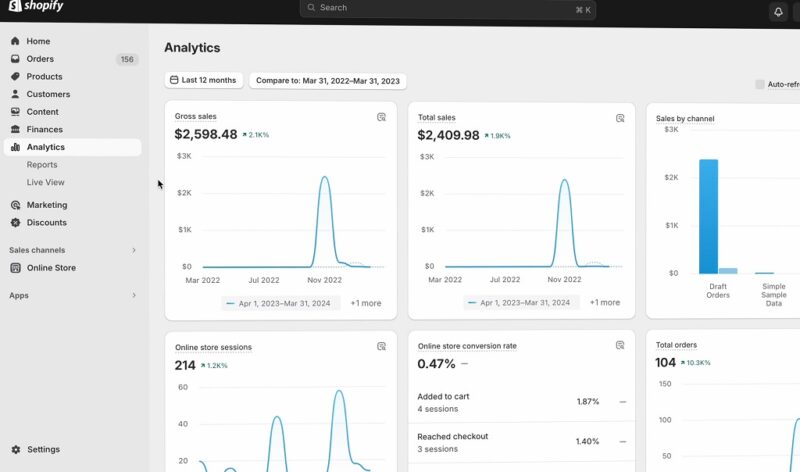
Running an online store without analytics is like flying blind. Platforms like Google Analytics 4, Shopify dashboards, and AI-driven insights make it possible to track where visitors come from, what they browse, and why they leave.
According to McKinsey (2024), businesses that rely on advanced analytics see 25% higher customer retention rates, underscoring the value of data in guiding decisions.
Equally important is collecting and acting on customer feedback. Tools such as Trustpilot, Yotpo, or built-in review systems help stores build social proof while boosting visibility in search rankings. Reviews not only reassure potential buyers but also highlight product or service weaknesses that can be improved.
By pairing analytics with structured feedback, businesses gain a full picture of customer behavior and satisfaction, ensuring continuous growth rather than one-time sales.
Step 10: Scale and Automate
Scaling in 2025 means automation and international expansion. Automating inventory, emails, and ad campaigns saves time. Expanding into markets like Southeast Asia and Africa, where e-commerce adoption is growing 20% annually, creates new opportunities.
| Region | Growth Rate YoY | Key Driver |
| Southeast Asia | +20% | Smartphone penetration |
| Africa | +18% | Mobile payment adoption |
| Latin America | +15% | Cross-border e-commerce |
| Middle East | +13% | Logistics improvements |
Conclusion
Launching an online store in 2025 requires strategic planning, legal compliance, customer-focused design, and ongoing optimization. The data proves that those who invest in user experience, fast fulfillment, and data-driven marketing gain a competitive edge.
With e-commerce sales exceeding $7.5 trillion, this is not just a good opportunity; it’s the defining business landscape of the decade.