

Minimalist interiors radiate calm, clean lines, and a sense of space. But anyone who has lived with pure white walls and neutral furniture knows how quickly serenity can turn to sterility.
The good news is you do not need a designer or a deep wallet to bring warmth and personality back into your space. A handful of affordable, well-chosen items can shift a room from “bland” to “balanced” while keeping your minimalist aesthetic intact.
With that said, we prepared a guide to adding color that complements minimalism. Expect specific product categories, current palettes, and budget-friendly tricks that feel intentional and modern rather than cluttered.
A Quick Color Game Plan
If you want a simple recipe for adding color without overthinking, start here:
- Pick one dominant neutral already present in the room.
- Choose two support colors from the same family of warmth. Example: warm white base with muted clay and sage.
- Apply the 60-30-10 guideline: 60 percent neutral base, 30 percent supporting textures, 10 percent accent pops.
- Start with swappable items before committing to paint or large furniture.
This simple framework gives you freedom while keeping visual calm.
Budget-Friendly Product Categories That Add Color Fast
Below are affordable, low-commitment items that make the biggest visual difference in minimalist rooms, plus real-world pointers and current trend notes.
Pillow Covers and Throws
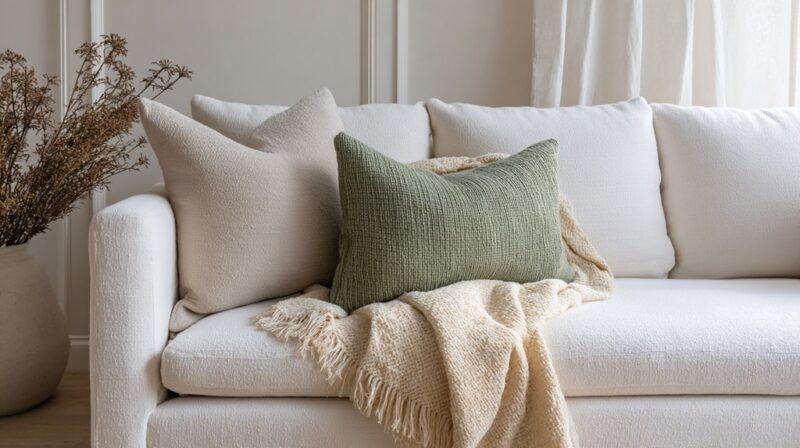
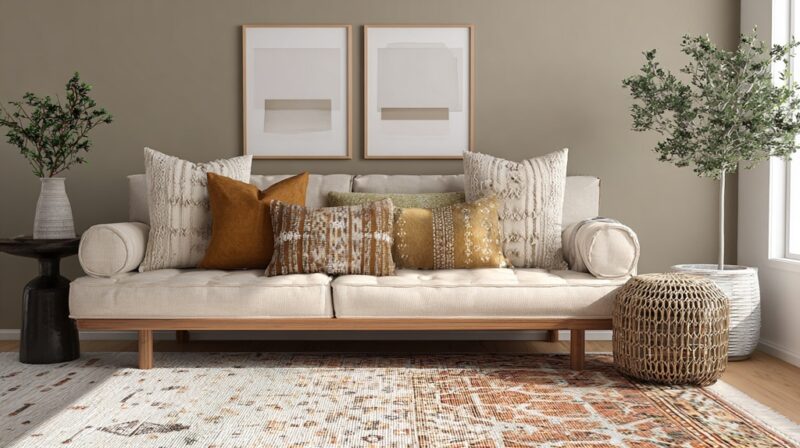
Why they work: Few items have more color-per-euro impact than textiles you can swap seasonally. A couple of cushions in muted clay and a throw in butter yellow can change the mood overnight.
Buying smart: Choose removable covers for easy laundering and storage. Textures like bouclé, slub cotton, velvet, or linen add interest even in solid colors. Warm whites and earthy mid-tones feel especially current in 2025.
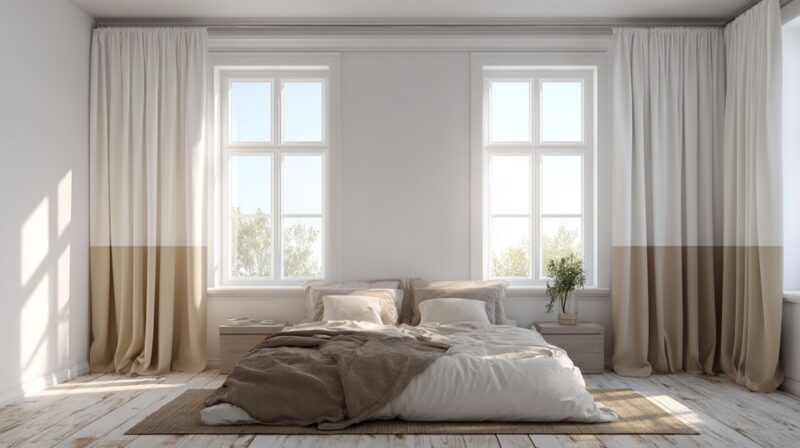
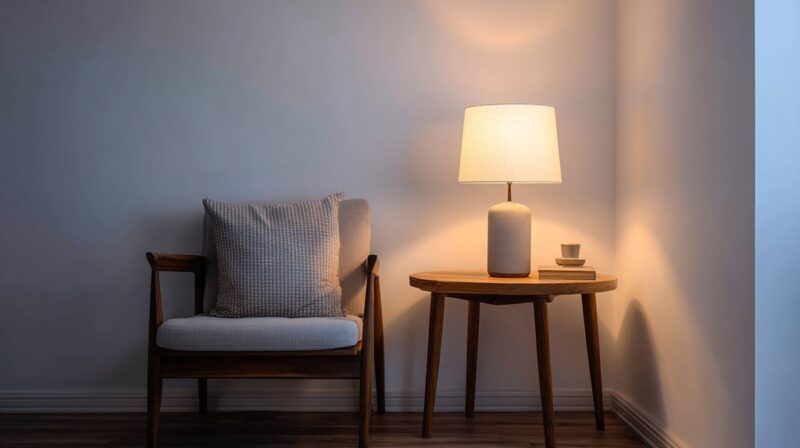
Why they work: Rugs set a room’s color temperature and define zones in open plans. Buying smart: Size matters more than pattern. Aim to anchor the front legs of your seating on the rug. Common living room sizes like 8×10 or 9×12 give a cohesive look. Pair with a low-cost rug pad for safety and comfort. Color tip: Muted multicolor rugs introduce palette variety while keeping furniture quiet. Even a flatweave jute rug with a subtle stripe can add visual warmth. Why they work: Vertical color blocks visually lengthen walls and soften architectural edges. Buying smart: Hang high and wide to make windows feel larger. Color-blocked or softly patterned drapery introduces color without busying the room. You can even DIY by sewing or clipping a colored band onto neutral panels. Why they work: An accent wall, closet interior, or even a small entry niche can shift the mood instantly, and it is renter-friendly. Buying smart: Look for thicker, fabric-like peel-and-stick papers. Choose patterns that align easily and can be repositioned. Why they work: One big piece looks cleaner than many small ones. In minimalist spaces, large-scale art feels intentional rather than cluttered. Buying smart: Pick an oversized abstract or landscape with your chosen colors, and keep the frame simple. Or mix in affordable decorative pieces like acrylic standees for a modern, lightweight pop of color. Let the print be the color story while everything else stays quiet. Why they work: Color is not only pigment but also temperature. Swapping a lampshade or adjusting bulb warmth can make neutrals feel golden or crisp. [/su_note]
Trend watch: Cozy, moody lighting fits the 2025 move toward warmer palettes and textures. [/su_note]
Why they work: Living green is the most forgiving color pop in minimalist rooms and pairs beautifully with earthy palettes. [/su_note]
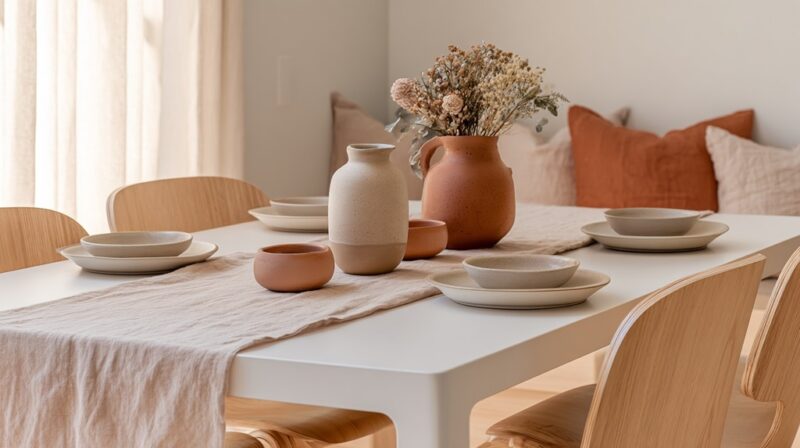
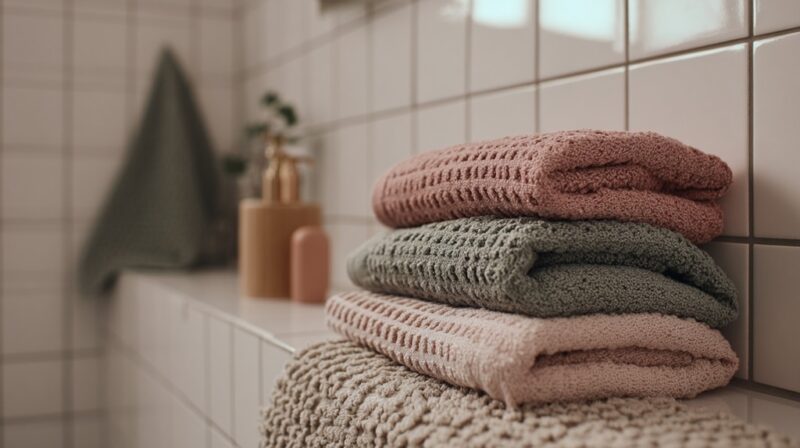
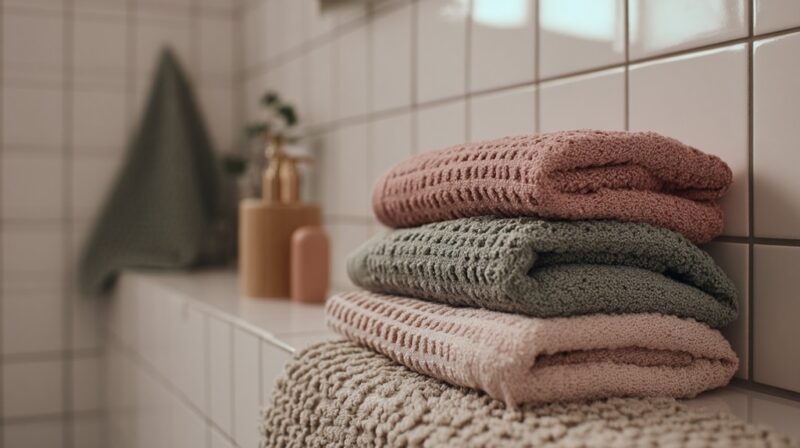
Why they work: Bedding and towels are color surfaces you already launder and replace regularly, so swapping tones is low risk. Buying smart: Mix one colored duvet with neutral sheets, or vice versa. Contrast piping on pillowcases creates subtle rhythm. Why they work: Kitchens and dining corners can look cold when purely white. Small, swappable pieces add warmth. Buying smart: Repeat one color from a nearby room so the eye moves smoothly through an open plan. Why they work: A few colored vases, a tray, or tinted glass tumblers add pinpoints of saturated tone without clutter. Tip: Keep silhouettes simple so color becomes the story. [/su_note]
No need for neon. The most current palettes are grounded, calm, and versatile: Designers across 2025 show homes use warm neutrals as the base, letting textiles or a single painted surface carry the accent. When stuck choosing a palette, refer to curated lists from Real Simple or Houzz trend roundups. Minimalism does not mean “no color.” It is about choosing only what matters and letting those essentials stand out. Color, used sparingly, gives essentials a sense of presence and personality. Designers in 2025 are steering neutral interiors warmer and more nature-inspired. Earthy browns, terracotta, taupe, ocher, dusty blue, sage, and olive show up repeatedly in trade shows, magazine spreads, and editor-curated model homes. Real Simple’s 2025 show home highlights soft greens, romantic nude pinks, warm creams, and textured tan plaster. The effect is grounded yet lively, a good reminder that minimalism can feel warm and human. Color affects how a space feels and functions. Research shows warm colors can energize, while cool colors tend to calm and expand perceived space. The key is choosing tones that support the room’s purpose, keeping lines clean, and limiting hues to a restrained palette. Minimalist pros recommend limiting the number of hues but playing with texture within them. One base neutral, one supporting neutral, and one accent color is a solid rule of thumb. Two accents at most if they belong to the same warmth family. Texture layering prevents flatness. Bouclé, wool, rattan, linen, and velvet in similar tones create depth without busying the space. Architectural Digest highlights how material variation in a near-monochrome room adds richness while staying minimal. Even small swaps can be smart investments if you choose well: Pick your palette: Warm white base, clay accent, sage support. Soften with curtains: Add neutral linen panels with a color band near the hem. DIY if needed. Add one art focal point: A large abstract print with clay and sage tones. Keep the frame simple. Green life: One medium plant in a terracotta planter. Total: about €209 before local taxes and shipping, often less when shopping sales or second-hand. Every space has its own rhythm, so it helps to plan color moves room by room. A few targeted changes in each area can pull your palette together and keep your minimalist home feeling cohesive without extra effort. Lead with the rug, then echo its two main hues in pillows and a throw. If you need more definition, try a peel-and-stick accent on a single wall or behind a media unit. Keep walls quiet, let bedding drive color. Warm neutrals like taupe or off-white on the walls make bold linens and art feel intentional. A headboard wall in soft sage or nude pink reads restful and modern. Use table linens and a runner to add a stripe of color through the center line of the space. Consider one colorful appliance or a set of tinted glassware as a small but scene-stealing accent. Towels, a bath mat, and a shower curtain can introduce a two-color story without any paint. For a micro transformation, try peel-and-stick wallpaper on the vanity wall, choosing a humidity-tolerant option. Minimalist design thrives on intention. Follow these tips to keep it serene: Research on environmental color effects suggests: Minimalism works because it quiets what is not essential. Color should support that quiet, not overpower it. Use this list when ready to buy. Start with what covers the most visual area for the least money: Minimalism thrives on intention. A small set of affordable, swappable items can dial in color without sacrificing clarity. Start with a palette anchored in warm, nature-inspired tones now trending in 2025. Use textiles and a single large focal piece to carry that palette. Keep shapes simple, repeat colors across the room, and let texture do the heavy lifting. Do that, and your minimalist room stays calm but gains a gentle, lived-in warmth. It starts to feel personal and inviting without straining your budget, a subtle yet powerful upgrade for your everyday space.
Area Rugs
Curtains
Peel-and-Stick Wallpaper and Decals
Ready-to-Hang Art and Large Prints
Lampshades and Bulbs
Plants and Colored Planters
Bedding and Bath Textiles
Table Linens, Kitchen Runners, and Small Serveware
Hardware and Small Accents
Fresh Color Ideas That Still Read Minimalist
Why Color Belongs in Minimalist Spaces
How Many Colors Is “Enough”?
Where Affordability Meets Quality
Update a Minimalist Living Room for Under €200
Example Budget Table
Item
Quantity
Target tone
Approx. unit price
Notes
Flatweave 5×7 rug
1
Clay mix
€70
Check washable options and pair with a basic rug pad
Pillow covers 50×50
2
Clay
€12
Change with seasons, store flat to save space
Lumbar cover
1
Sage
€15
Bridges rug and art colors
Throw blanket
1
Butter yellow
€20
Seasonal swap
Linen curtain panels
2
Warm white with colored band
€35
Color-block DIY by joining panels
Large art print
1
Clay + sage
€35
Oversized single piece keeps minimal look
Plant + terracotta pot
1
Green
€10
Adds organic color echo
Room-by-Room Color Moves
Living Room
Bedroom
Kitchen or Dining Nook
Bathroom
Guardrails That Prevent “Visual Noise”
Color and Mood
Quick Shopping Checklist
Inspiration and Sources
Final Word